


PandaLoom-Movies & Dramas
古言短剧
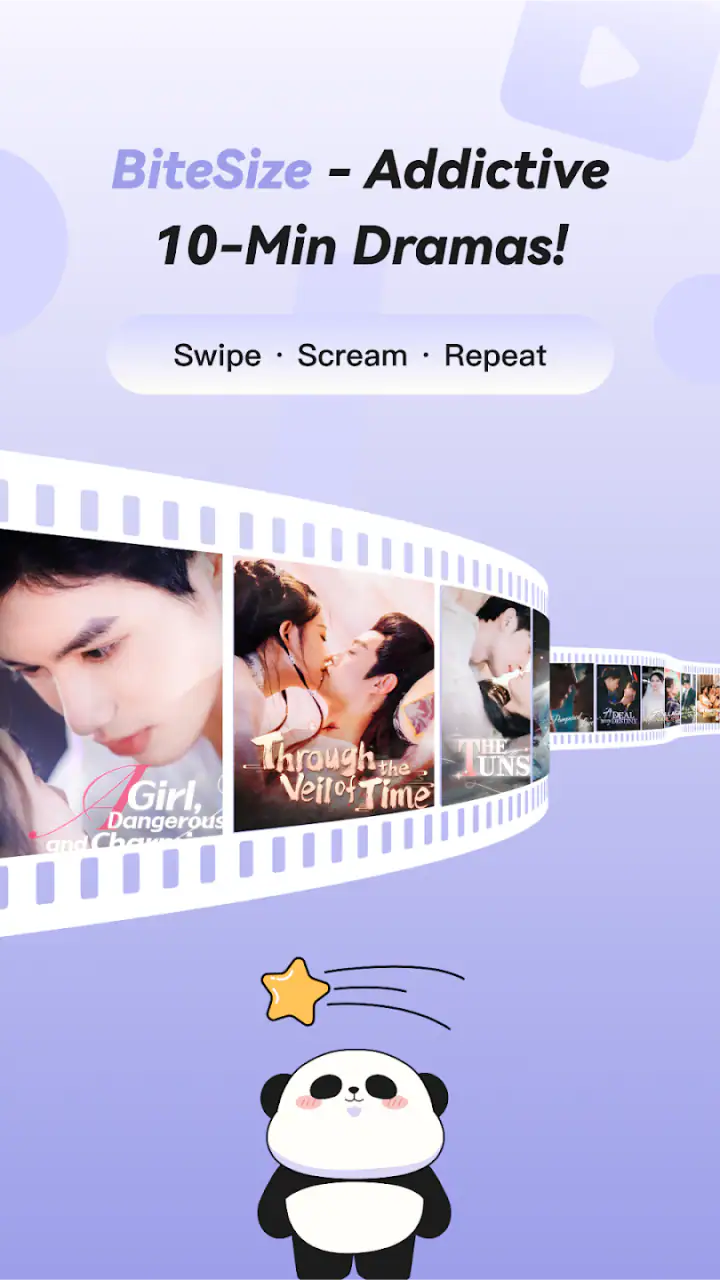
I tried PandaLoom-Movies & Dramas as a small-screen entertainment app, and my first impression was clear: it is built to make short drama viewing feel light, colorful, and easy to start. The cute panda-inspired presentation gives it a softer personality than a typical video catalog, while the short-form format suits those moments when I want a story without committing to a full movie or a long television episode.
That appeal is especially easy to understand on a shared household device. One person can pick it up during a short break, watch a few scenes, and hand the phone back without turning the evening into a major viewing session. At the same time, the app deserves a more careful look before I recommend it to everyone in a home, because its public reception is currently weak and the purchase range is unusually broad. My opinion is therefore mixed: the concept is convenient and approachable, but the practical experience depends heavily on expectations, spending boundaries, and whether short dramas are already your preferred way to watch.
How it fits into a shared household
The most natural use I found for this kind of app is casual, turn-based viewing. Imagine a family member waiting for an appointment, another person using the television, and a third person wanting something dramatic but brief. A short-drama app can fill that gap better than a conventional streaming service, where browsing alone may take longer than the available viewing time. PandaLoom’s entertainment focus and kawaii visual style make it feel suited to quick discovery rather than a formal movie night.
That does not mean it automatically works as a family television replacement. On a phone or tablet, viewing is usually more personal, and the app’s appeal may differ sharply between household members. One person might enjoy the compact stories and playful design, while another may find the presentation too sweet or prefer longer, more polished productions. I would treat it as an additional option for individual or shared mobile viewing, not as the single entertainment hub for everyone.
A useful household routine is to keep expectations simple: use it when someone wants a quick dramatic break, and avoid presenting it as a guaranteed group activity. If several people are watching together, decide beforehand who is choosing the episode and how long the session should last. That small agreement prevents the common shared-device problem where one viewer keeps browsing while everyone else waits.
Related News

Why WhatsApp Messenger Still Makes Everyday Communication Feel Easy

Jurassic World: The Game Is the Better Dino Tycoon for Strategic Players

Threads in Real Life: Who Should Join, Lurk, or Leave

How SHEIN Turned Shopping Into an Endless Content Feed

How to Make Fortnite Feel Smarter on Mobile

Should You Switch to Microsoft Outlook on Mobile?
The app is free to install, which lowers the barrier to trying it. However, free installation should not be confused with unlimited free viewing or a completely cost-free experience. PandaLoom includes in-app purchases ranging from $4.99 to $499.99 per item. That is a substantial spread, so I would not let a child or a casual user explore payment screens without an adult nearby and a clear household rule about purchases.
What the visual style gets right
The cute aesthetic is more than a decorative detail because it changes how the app feels before a drama even begins. The softer look can make the catalog less intimidating for someone who does not want a dense, serious streaming interface. It may also help younger-looking users feel comfortable navigating the app, although the visual design alone should never be treated as proof that every story is appropriate for children.
I also think the style gives PandaLoom a recognizable identity. Many entertainment apps blur together through dark backgrounds, rows of thumbnails, and aggressive recommendations. A kawaii presentation can make this one easier to identify on a shared device and more pleasant for users who prefer playful interfaces. The trade-off is that people seeking a mature, restrained, or cinema-like atmosphere may not connect with it.
Gallery
Setting boundaries before anyone starts watching
Because this app is used for entertainment rather than work or communication, setup should be quick, but I would still establish boundaries before handing it to a child or adding it to a family tablet. The app is marked for Everyone, yet that label is not a substitute for checking individual story themes. Short dramas can move quickly, and a general age label does not tell me whether every plot, relationship, or emotional situation will suit every member of the household.
My practical approach would be to open the app first, inspect the available titles, and decide whether the overall tone fits the intended viewer. This is particularly important when the device is shared by adults and younger users. A bright interface can create the impression of universally gentle content, but the stories themselves may still be aimed at different tastes or maturity levels.
Payment boundaries matter just as much as content boundaries. Since the individual purchase ceiling reaches $499.99, I would keep purchasing under the account holder’s control and explain that tapping a dramatic unlock or premium option may have financial consequences. On a shared device, the safest workflow is simple: the person who owns the account makes the payment decision, while other viewers can suggest what they want to watch without assuming that every locked item is approved.
I would also avoid leaving the app open at a payment screen. That is not a criticism unique to PandaLoom; it is sensible behavior for any entertainment app that offers purchases. The unusually wide range between its lowest and highest listed item prices makes this precaution more important here. If my household wanted completely predictable spending, I would favor an alternative service with a clearer subscription structure or no purchase path at all.
Why the free starting point can be misleading
Free access is useful for testing the tone, pacing, and visual presentation before spending anything. I would use that opportunity to answer three practical questions: Do the stories hold my attention? Is the reading or viewing flow comfortable on my device? Does the app feel worthwhile when I watch only for a few minutes at a time?
If the answer to those questions is no, paying for more content will not solve the underlying problem. A purchase can unlock access, but it cannot make a mismatched style suddenly feel appealing. I prefer to test the app during the exact situation in which I expect to use it, such as a short commute, a lunch break, or a quiet period at home. That gives a more honest impression than browsing it for a few seconds in a store listing.
Another useful boundary is to separate shared viewing from personal preferences. If one household member pays for a title, that does not mean everyone will enjoy it. Agreeing on whether a purchase is for one person or for group viewing avoids resentment, especially when the app is being used on a common tablet.
Coordinating viewing without stepping on each other
PandaLoom is best suited to a lightweight coordination system rather than a complicated family schedule. I would create a simple household rule: whoever is currently using the device chooses from the available dramas, unless the group has already agreed to watch one together. This works because the app’s short-form identity supports flexible sessions, but it also acknowledges that different viewers may want completely different moods.
For shared use, it helps to decide whether a story is being watched continuously or in small pieces. If a drama depends on cliffhangers, stopping halfway through can make the next viewer unsure what happened. A quick verbal note such as “we stopped after the latest episode” is often enough. I would not rely on memory when several people are sampling different titles on the same device.
When coordinating with children, I would make the adult responsible for choosing the first title and reviewing whether the tone is suitable. After that, the child can participate in choosing between approved options. This preserves some independence without treating the app’s Everyone label as a complete content-filtering system.
For adults sharing one phone, the main issue is less about supervision and more about keeping recommendations and viewing habits understandable. If one person uses the app for romantic dramas and another prefers different stories, a shared session can become confusing. In that situation, a separate personal device or a conventional service with clearer profile separation may be a better fit. I would not assume that every app offers distinct household profiles simply because several people use the same device.
The app can also work as a conversation starter. Short dramas are easy to sample together, and their compact structure gives a household something to discuss without requiring a full evening. I found that useful when deciding whether a title was worth continuing. Instead of spending a long time on a film that nobody enjoys, the group can make a quick decision and move on.
Where alternatives may coordinate better
Compared with a mainstream streaming platform, PandaLoom appears more focused and less formal. A larger service is usually the stronger choice when I want established movies, broad genre coverage, mature profile management, or a predictable subscription experience. It may also be better for a television-centered household where everyone expects high-resolution long-form viewing and individual recommendations.
Compared with social video platforms, PandaLoom has a clearer drama identity. Social feeds are excellent for endless discovery, but they can be distracting and difficult to coordinate around. A dedicated short-drama app is more appealing when I want the session to stay centered on fictional stories rather than a mixture of clips, comments, and unrelated recommendations.
The trade-off is breadth. If my household wants documentaries, live content, children’s programming, and major films in one place, I would choose a broader service. If the goal is specifically to sample short dramas through a cute mobile interface, PandaLoom makes more sense. The right choice depends less on the word “free” and more on whether its narrow entertainment purpose matches the way the device is used.
Age, trust, and the developer behind the app
PandaLoom is developed by 古言短剧 and is listed for Everyone. I see that as a useful starting signal for general accessibility, not a guarantee that every title will suit every age group. Parents and guardians should still preview the catalog and decide what fits their own standards. The same advice applies to grandparents, guests, or anyone who may interpret a cute interface as a promise of child-focused programming.
Trust also includes financial judgment. The app’s average rating is 1.9 from 57 ratings, with 18 written reviews, so I would approach it as a product that still needs to earn confidence rather than one with broad public approval. That rating does not tell me exactly which problems affected other users, but it does tell me not to recommend immediate spending. I would install it, test the free experience, and watch how comfortably it fits my routine before considering any purchase.
Its release date of Jul 10, 2025, and current version 1.7.13 place it in a relatively early stage of its life compared with long-established entertainment platforms. That can be positive if the developer continues refining the experience, but it also means I would keep my expectations realistic. Newer apps can feel less settled, and a low rating makes careful trial more sensible than blind loyalty.
The technical entry requirement is modest: it runs on Android 5.0 or later. That makes it accessible on many older Android devices, which is valuable for a household tablet that is no longer used as a primary phone. Still, compatibility is only the first question. An older device may provide a less comfortable viewing experience than a newer one, so I would test playback, navigation, and battery behavior before assigning the app to a shared family tablet.
One non-obvious consideration is account ownership. If several people use the same device, the person signed into the relevant app-store account may be the person exposed to purchase prompts. I would make that relationship explicit before anyone watches. The app itself may be perfectly easy to open, but household trust breaks down when nobody knows whose account is being used or who approved a purchase.
Who should try it, and who should skip it
I would recommend trying PandaLoom to someone who enjoys short dramatic stories, likes playful visual design, and wants a free starting point for casual mobile viewing. It is also a reasonable experiment for a household with an older Android tablet that needs a simple entertainment use, provided an adult handles spending decisions and checks the content first.
I would be more cautious with users who demand a polished, dependable catalog, strong public reception, or a clearly structured family experience. The low average rating is a meaningful warning sign, and the purchase range makes it unsuitable for unsupervised use. People who mainly watch long movies, prestige series, sports, or educational programming will probably get more value from a broader alternative.
I would also skip it for a household that wants separate, clearly managed viewing identities. Unless the particular setup already provides the boundaries the family needs, a shared device can blur recommendations, progress, and payment responsibility. In that case, choosing a service designed around household profiles is the more sensible decision.
My household verdict
After looking at PandaLoom as both a personal entertainment app and a shared-device option, I see a clear but limited role for it. Its cute presentation and short-drama focus make it approachable for quick sessions, and the free installation means I can test that appeal without committing at the start. The Android compatibility also gives it a chance on older household hardware.
My recommendation comes with firm conditions. I would preview the available stories, keep purchase decisions with the account owner, and avoid assuming that an Everyone label makes every title suitable for every viewer. I would also treat the low 1.9 average as a reason to experiment carefully rather than spend immediately. The app may work for someone whose tastes line up with its format, but it is not an automatic choice for a whole family.
The best way to use PandaLoom is as a controlled, casual short-drama option—not as an unrestricted shared streaming replacement. If you want quick mobile stories, enjoy a kawaii interface, and are comfortable setting clear household rules, it is worth a cautious trial. If you need deep catalog variety, mature account separation, or predictable spending, I would choose a more established alternative instead.
FAQs for PandaLoom-Movies & Dramas
What is PandaLoom-Movies & Dramas?
PandaLoom-Movies & Dramas is an entertainment app designed for users who enjoy watching movies and drama series in one place. Its catalog, layout, and available titles may vary depending on your country and the current version of the service. Before downloading, check the app description, supported devices, language options, and whether the content is officially licensed in your region.
Is PandaLoom-Movies & Dramas free to use?
The app may offer free access to some content, but availability can depend on advertisements, account requirements, regional restrictions, or premium features. Some titles or viewing options may require payment or a subscription. We recommend reviewing the in-app pricing details and subscription terms carefully, including renewal conditions, trial periods, cancellation policies, and any charges handled through Google Play or the App Store.
Can I watch movies and dramas offline with PandaLoom-Movies & Dramas?
Offline viewing depends on the features enabled in the version available for your device and region. If downloads are supported, they may be limited to selected titles, require an active account or subscription, and remain available only inside the application. Downloaded videos can also expire or disappear when licensing changes, so the app should not be treated as permanent storage for movies or episodes.
Does PandaLoom-Movies & Dramas provide subtitles or multiple languages?
Subtitle and audio options can differ from one movie or drama to another. Many streaming applications provide subtitles for selected titles, but language support is not always consistent across the entire catalog. Before choosing the app, check screenshots and title information for available subtitle languages, audio tracks, and playback settings, especially if you plan to watch content in a language other than the original.
Is PandaLoom-Movies & Dramas safe and compatible with my device?
Download PandaLoom-Movies & Dramas only from a trusted official store and verify the developer name, permissions, ratings, and recent update history before installing it. Compatibility may depend on your Android or iOS version, available storage, and internet connection. Avoid unofficial modified versions, and review the privacy policy to understand what account, device, advertising, or usage information the app may collect.
Pros
- Offers a broad catalog of movies and drama series in one app.
- Simple layout makes browsing titles quick and straightforward.
- Useful search tools help locate specific movies or shows.
- Supports convenient streaming from mobile devices.
- Regular content updates can keep the library feeling fresh.
Cons
- Availability of titles may vary depending on your country or region.
- Some content may require a premium subscription to access.
- Video quality can depend heavily on your internet connection.
- The app may display advertisements during browsing or playback.
- Subtitle and audio options may not be available for every title.


